
Most businesses have one customer they would happily clone if they could. They renew because they are genuinely really appreciative of the service you provide. And if you asked them, they would gladly tell a prospect why they stayed. Case study video production is a way of getting that customer in front of far more prospects.
Your best salesperson is a customer. Put them on camera
Prospects don’t really trust brochures, and I can’t blame them, because they know who wrote them. A customer talking about their own experience is a different thing altogether. If someone doing a similar job, with a similar budget to argue over, explains what was going wrong before and what changed afterwards, the person watching reaches the conclusion on their own, which is far more persuasive than being told it.
Video does this better than a printed quote because so much of what makes someone believable isn’t in the words. You see them think before they answer, and you can usually tell whether they mean it. We’ve been making corporate video in Surrey for about twenty years, and customer stories are one of the few formats I’ve watched sales teams keep using long after everything else from a campaign has been retired.
What case study video production involves, start to finish
It’s less disruptive than most people assume. We start with a call to your customer, usually about half an hour and with no cameras involved, so we can hear how they tell the story in their own words and find out if there anything they’d rather not get into.
That call gives us a question plan, which we share with you and the customer before the day. It’s a set of prompts rather than a script, so they know roughly what’s coming without feeling they need to rehearse.
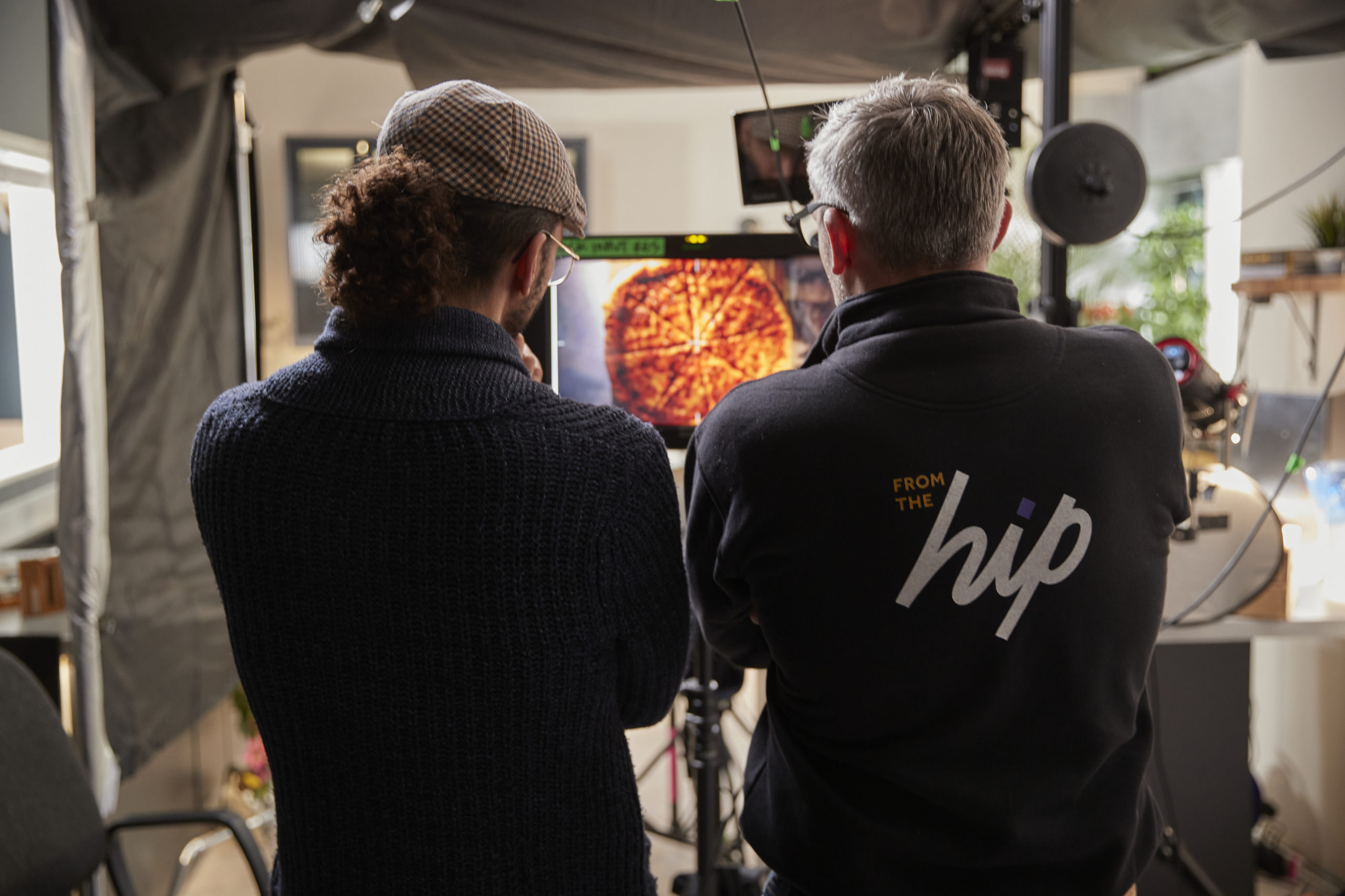
We usually keep the crew small, normally a director or producer asking the questions plus a camera operator, and we will make sure there is attention to detail regarding the sound as much as the visuals. Your customer only needs to give us about an hour max in front of the camera. We spend the rest of the time filming b-roll, the footage of their team and site actually doing the work, because without it you end up with a talking head and a logo.
After the shoot we send you a first cut, and once you’ve made your changes the final version goes to your customer to sign off as well. This process can be turned around in just 1 week from that first call to a finished film.
Finding the story, and why we keep the wobble in
Most good customer stories follow a similar shape. There is usually a stretch in the middle where they weren’t sure it was going to work, sitting between how things were before and the point they realised it had. If you can back up the ending with a figure, so much the better.
That middle bit is the part clients most often want to edit out, and I understand why, but it’s what makes the rest of the film credible. When a story has no doubt anywhere in it, viewers file it alongside every other advert they’ve learned to tune out. So we ask about it directly, and in my experience people are more willing to talk about it than you would expect. A lot of decent brand storytelling we do in our Surrey studio comes down to being comfortable leaving that moment in.
How we film interviews so nobody sounds like a hostage
Everyone has seen the version where a managing director reads approved sentences off an autocue and looks quietly desperate to be somewhere else. Nobody watching believes a word of it.
We often don’t use autocue or a script. Our interviewer sits right next to the lens and has a proper conversation, so your customer is talking to a person rather than performing for a camera. If budget allows, we use two cameras at once, a wide and a close-up, which means we can cut between them in the edit and rarely have to ask anyone to say something again. We leave the pauses in too, because a second or two of thinking before a good answer tends to make it more convincing.
Most of the work happens before the camera rolls, though. A few years ago an agency booked us to film a case study with the CEO of a global courier company, one of their client’s biggest customers. He was only in the country for an afternoon, so we had an hour to get him interviewed, and the tension on set was high, as were the stakes. When he walked in, the agency team went completely silent.
I heard the Aussie accent and asked him what his sport was. Luckily it was rugby, so that’s what we talked about while he was in make-up and getting his mic fitted. By the time we turned over we were best buds and on first-name terms, and you could see it in the interview. The agency used us again and again after that, whenever they needed to film him or anyone else high profile.
I’ve never thought of it as a technique. You treat people as normal people, because that’s what they are, and everyone’s equal once they’re sat in that chair. Any Surrey videographer can light a room well, but getting the person in it to forget about the kit is where most of our effort goes.
Names and numbers engage the audience more than adjectives
Phrases like “great service” are nice to hear and almost no use in a case study, because they could have been said about anyone. What gets a prospect’s attention is a real person describing a specific result, something along the lines of setup time coming down from three days to one.
It matters more than it used to, because a lot of buyers now ask AI search tools for a shortlist before they speak to any suppliers, and those tools favour specific claims that can be checked, much as a cautious buyer would.
We try to hold ourselves to the same standard. Across our films we average a 69% view-through rate, against an industry norm of roughly 42%, and I’d much rather point to that than describe us as passionate. If you want names and figures in your film, ask your customer’s permission before the shoot. It’s a far easier conversation to have before the crew turns up.
One shoot, five assets: the sales deck clip to the LinkedIn cut
Half a day of filming should give you a lot more than one video sitting on a case studies page. Typically we’d cut a full film of two or three minutes for your website and a 60-second version for proposals and emails. Then there are short quote clips your sales team can drop into a deck, and a vertical edit for LinkedIn. We’ll also take stills, so you can publish a written version of the case study alongside.
All of that needs deciding before the shoot, which is why we use what we call the Ultimate Brief. Every format gets planned at the start, so on the day we capture the vertical framing and the photography we need instead of finding out in the edit that something is missing. It’s a big reason the corporate videos our Surrey clients commission are still being used years later.
Got a customer who’d say yes? Let’s film them
You probably already have someone in mind. Have a word with them first, then send us their name and where they’re based, and we’ll handle everything from there. A lot of our Surrey corporate video production starts in exactly that way, with one happy customer and someone willing to ask them.
We are a video production company in Surrey, based at our studio on the edge of Bourne Woods near Farnham, and we travel to wherever your customers are. If you’d like video production in Surrey that ends up in front of prospects rather than sitting forgotten in a shared drive, drop us a line.